
RFID safety refers to the safe use of RFID technology and its radio frequency emissions in workplaces, healthcare facilities, warehouses, laboratories, and public environments. Understanding RFID radiation, electromagnetic exposure, and regulatory standards helps organizations deploy RFID systems safely while addressing common concerns about human health and operational safety. As RFID technology continues to revolutionize supply chains, healthcare, retail, and manufacturing,…
RFID Solutions

Continue Reading
How RFID Tags for Inventory Help Achieve Real-Time Visibility and Control
RFID tags for inventory help businesses track, identify, and manage inventory items in real time across warehouses, stockrooms, retail stores, and supply chain operations. The right RFID inventory tracking system improves inventory accuracy, visibility, receiving efficiency, cycle counting, and asset management while reducing manual errors and labor costs. Quick Summary: Why RFID Tags for Inventory Management? The Case for RFID…
RFID Solutions
Continue Reading
A Comprehensive Guide to Choosing the Right Asset Tracking Software
Asset tracking software helps organizations monitor, manage, and locate physical assets across facilities, warehouses, laboratories, and enterprise environments. The right asset tracking software improves visibility, operational efficiency, compliance, and inventory accuracy through technologies such as RFID, barcode, GPS, and BLE tracking. In the fast-paced and demanding world of enterprise operations, tracking and managing assets efficiently is the key to success….
RFID Solutions
Continue Reading
RFID Frequency Ranges – How to Choose the Right Frequency & Tag
RFID frequency ranges are the radio wave bands used by RFID systems to communicate between tags and readers. These frequencies affect read range, speed, performance, and compatibility with different environments, making LF, HF, NFC, and UHF suitable for different RFID applications. RFID tags are classified by the frequency range they are intended to function in. There are four main frequency…
Manufacturing
Continue Reading
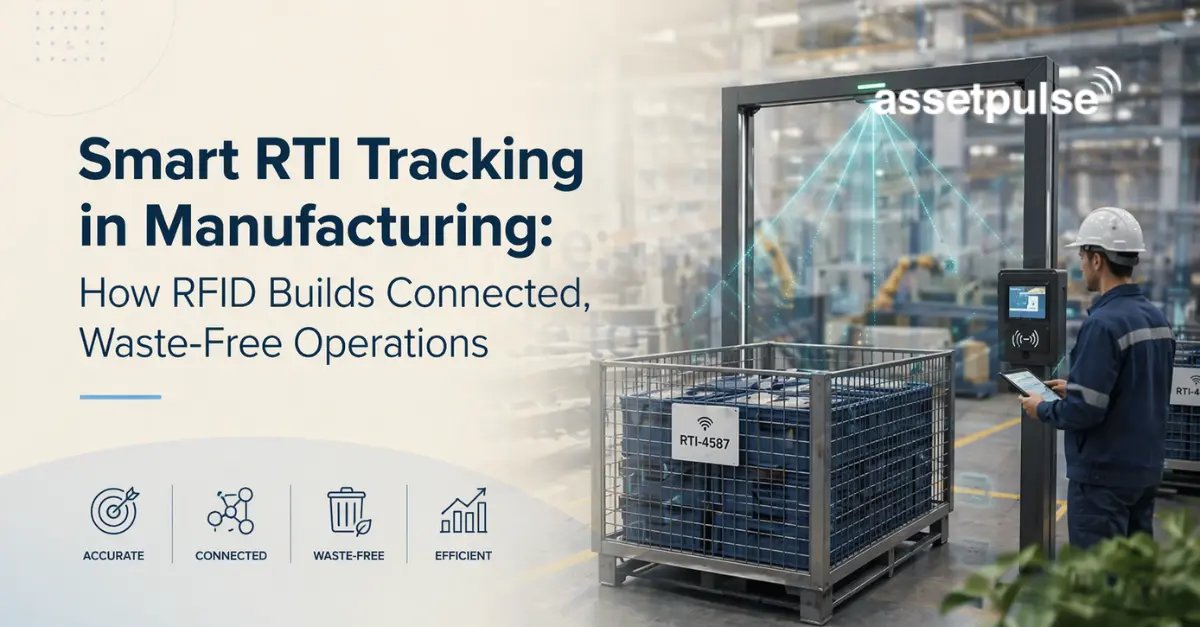
Smart RTI Tracking in Manufacturing: How RFID Builds Connected, Waste-Free Operations
RTI tracking in manufacturing is the process of monitoring reusable transport items such as pallets, crates, bins, and containers as they move through production, storage, shipping, and supplier networks. Instead of relying on manual logs or line-of-sight barcode scans, modern RTI tracking uses RFID to capture movement automatically, improve accuracy, reduce losses, and give manufacturers real-time visibility across multiple facilities….