How Can RFID in Manufacturing Improve Visibility, Traceability, and Digital Transformation?
"Measurement is the first step that leads to control and eventually to improvement. If you can't measure something, you can't understand it. If you can't understand it, you can't control it. If you can't control it, you can't improve it." — H. James Harrington
This is the underlying principle behind the vision of Digital Transformation. AssetPulse's RFID for manufacturing solutions enable organizations to achieve this vision.
IoT including RFID and BLE sensors, coupled with the AssetGather platform, can aid in optimizing manufacturing processes to reduce time and cost, while improving decision making and increasing efficiency.
The manufacturing industry has succeeded in applying a dizzying array of technologies to gain improvement in throughput and operational efficiencies. As the industry tries to maximize its margins, it has to address the still-significant gaps in supply chain and operational visibility along with sobering inaccuracies that still plague the production lines. These gaps and inaccuracies have varying impact, depending on the vertical — lack of traceability in the biomedical device industry can have debilitating consequences, whereas a plastic molding line can handle relatively higher tolerances. RFID can bridge the gap between manufacturing execution systems (MES), enterprise resource planning (ERP) systems, and the floor. AssetPulse RFID solutions provide data at a much greater level of accuracy, timeliness, and detail.
How Can RFID in Material Inventory Management and WIP Tracking Improve Visibility and Reduce Errors?
Leveraging RFID in supply chain is well understood. From the processing of the ASN, Receiving, Inspection, Put-away and Raw Material Fulfillment/Replenishment, AssetPulse RFID solutions can be used to increase automation and eliminate manual errors.
A bigger bang for the buck can be realized by applying RFID in manufacturing processes other than Material Handling. Today, there is limited visibility into most operations. AssetPulse can help organizations become a more data-driven enterprise — increasing operational efficiencies, optimizing floor schedules, improving production planning, and preventing errors:
- Traceability of raw material and components — from warehouse to production line, facilitating optimized JIT inventory management; helps in monitoring wastage and shrinkage
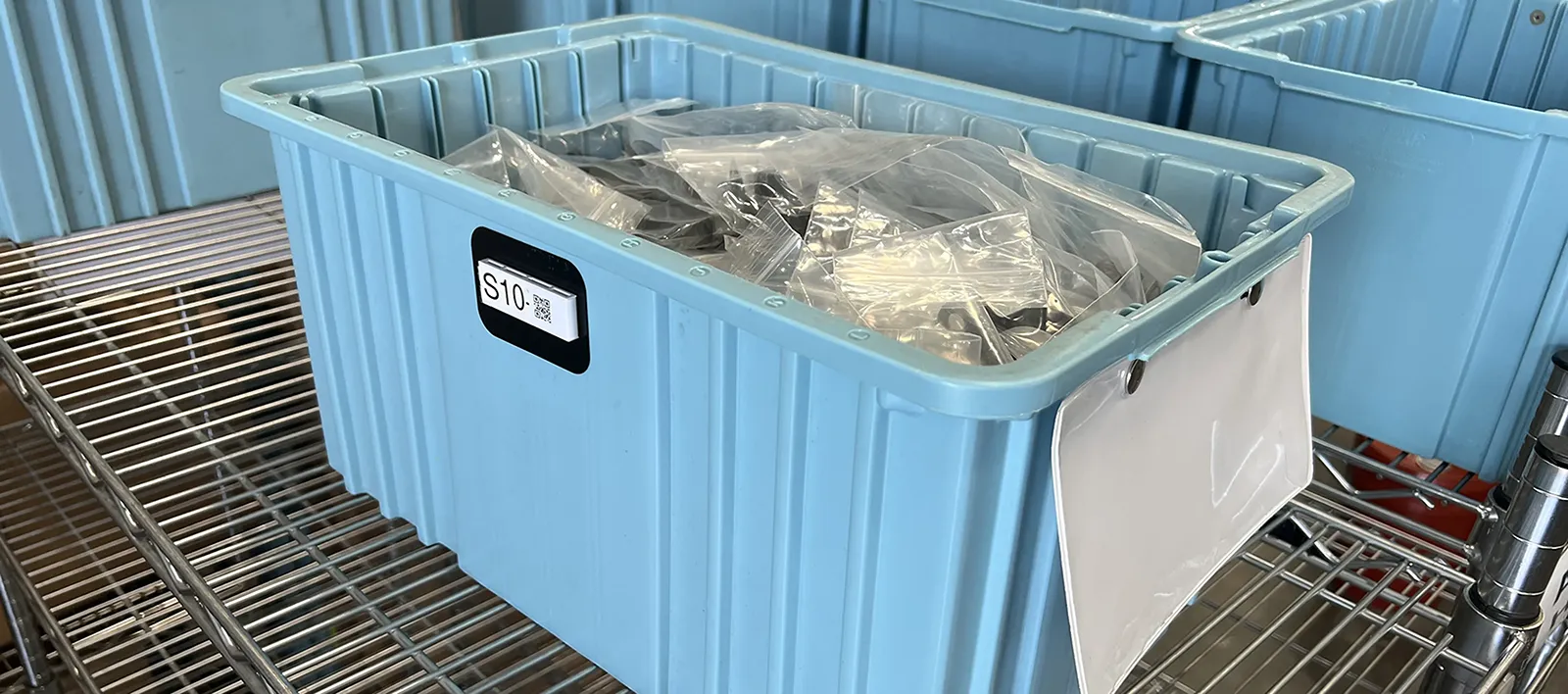
- Efficient empty-bin replenishment management
- Tying the lot# and batch# data of raw material to the product itself, for increased traceability
- Work order tracking
- Tracking technician time at each work cell — know who worked on what and for how long
- Tracking WIP product along with associated travelers
- Tracking finished goods in the distribution center
- Finished goods on consignment at the customer site
How Can RFID in Production Equipment and Tool Tracking Improve Visibility and Prevent Quality Errors?
Other essential processes that are tightly coupled with the manufacturing line include management of tools and equipment. With more focus on the product itself, visibility of the tools and equipment on the line is very limited. AssetPulse solutions can be used to track:
- Actual tool and equipment inventory on the line — what is used, where, and on what product
- Management of calibration, PM, repairs, and safety inspections
- Identify unutilized tools and equipment, helping in optimal asset utilization
- Movement of tools and equipment within the line, where a tool used in the wrong location can lead to high-impact quality errors
- Tracking onboarding of new equipment and disposal of obsolete equipment
How Can RFID Improve Finished Goods Tracking from Production to Distribution?
AssetPulse's RFID tracking system for manufacturing can be used to track finished goods, from the end of the production line, to inspection, quality, and finally shipping out to the warehouse or distribution centers. Several compliance and traceability driven processes — like creating Device History Records for biomedical devices — can be efficiently executed with AssetPulse solutions. Monitoring the beginning and/or end of each of these phases can provide insight into operational bottlenecks, roadblocks, and other inefficiencies that have hitherto lay hidden.
Post production, finished goods can continue to be tracked to and at the distribution centers and warehouses. Further, they can continue to be tracked at distributors and customer sites, especially when shipped on consignment.
How Can RFID Improve Quality Control in Manufacturing?
Every industry tries to maximize quality metrics using processes that increase automation and accuracy. Quality processes permeate every phase of manufacturing. AssetPulse's RFID solutions can ensure correct and timely use of raw materials on the manufacturing line and help enforce a FIFO process for raw materials with limited shelf life. Quality metrics can be collected throughout the process, providing data for statistical and root cause analysis. All paper-based processes can be aided by RFID-tagging the documents to enable automated and reliable traceability.
How Does RFID Integrate with MES and ERP Systems to Improve Manufacturing Operations?
Most enterprise manufacturing facilities are instrumented with enterprise systems to aid in manufacturing. AssetPulse's RFID solutions have several integration touch points to facilitate bi-directional flow of data to and from such systems. Given that AssetPulse provides a real-time view of the physical location of the assets being tracked, exception events can also be communicated to enterprise applications.
What are the Components of the AssetPulse RFID System for Manufacturing?
- AssetGather Server software to visualize, report, and alert on all aspects of manufacturing operations
- AssetGather Mobile software on the handheld RFID Reader
- AssetGather Adapter software managing fixed RFID readers
- RFID tags rugged enough to withstand the challenging manufacturing environments
What Types of RFID Tags and Readers Are Best Suited for Manufacturing?
WIP product, tools, and manufacturing equipment can all be tagged with RFID inventory tags. One unique requirement of these tags is that they need to withstand extremes in temperature, pressure, moisture and chemical exposure, in addition to shock, vibration, and mechanical impact. AssetPulse has a wide variety of tried and tested RFID tags to address such challenges.
Manufacturing environments also require ruggedized RFID hardware — both handheld and fixed readers and antenna. Handheld readers have to withstand being dropped on concrete floors or being exposed to moisture. Fixed readers and antenna need to tolerate wide temperature ranges and withstand dust, moisture, or outdoor conditions. AssetPulse offers a wide selection of readers, antennas, and cables suitable for environments ranging from sterile clean rooms to heavy engineering factories.
Key Benefits of Using RFID in Manufacturing
- Gain visibility of your WIP manufacturing floor to eliminate inefficiencies and quality issues
- Receive exception alerts when errors and suboptimal events occur
- Maximize throughput
- Maximize efficiency of manufacturing labor